Controlled at every stage, recorded at every step
Quality is managed as a sequence of defined controls running from supplier approval through to the documents that travel with the goods — and as a record that lets any delivered consignment be traced back to its source.
What we commit to
Our quality policy sets the standard the business works to. It applies to everything we buy, store, process, package and ship, and it applies equally to the domestic trade and to export consignments.
- Supply only against a written specification that both parties have agreed
- Describe every consignment accurately, including where it falls short
- Buy from suppliers who have been assessed and approved before delivery
- Inspect, sample and test at defined points rather than on an ad-hoc basis
- Keep records that allow a delivered consignment to be traced back to source
- Store and handle product in conditions that protect it from damage and contamination
- Meet the regulatory requirements of both the country of origin and the destination
- Investigate every complaint and correct the cause, not only the symptom
- Train the people doing the work and hold them to the same standard
- Review the system regularly and improve it where the evidence says we should
The commitments above describe the standard the business works to today. The formally approved and signed quality policy document will be published here, with its approval date, once issued.
The quality control sequence
Ten controls, in the order they occur — from the assessment that has to happen before a supplier delivers, to the document check that happens before the paperwork is released.
Step 1: Supplier approval
SourcingNo supplier delivers into our stores before they have been assessed. Approval covers who they are, what they can realistically supply and whether their handling practices are good enough to protect product quality.
- Identity, registration and location of the farmer, group or trader recorded
- Assessment of the crops supplied, typical volumes and seasonality
- Review of on-farm or in-store handling, drying and storage practices
- Trial or first-delivery assessment before a supplier is used regularly
- Approved suppliers recorded on a register and reviewed on performance
Step 2: Product inspection
IntakeEvery incoming delivery is inspected before it is accepted into store. The purpose is to catch problems at the gate, where they can still be rejected, rather than after the consignment has been mixed with approved stock.
- Visual inspection of the consignment and of the transport it arrived in
- Check for foreign material, damaged grain, discolouration and off-odours
- Check for signs of live infestation or previous insect damage
- Verification of quantity against the delivery documentation
- Acceptance, conditional acceptance or rejection recorded with the reason
Step 3: Sampling procedures
AssessmentGrading and testing are only as reliable as the sample they are performed on. Samples are drawn to a set method so that the result represents the whole consignment rather than the most convenient bag.
- Samples drawn from multiple points across the consignment, not from one bag
- Increments combined and reduced to a working sample by a set method
- Sample identified with supplier, date, lot reference and the person sampling
- Retention samples kept for reference for an agreed period
- Buyer or third-party witnessed sampling arranged where the contract requires it
Step 4: Grading procedures
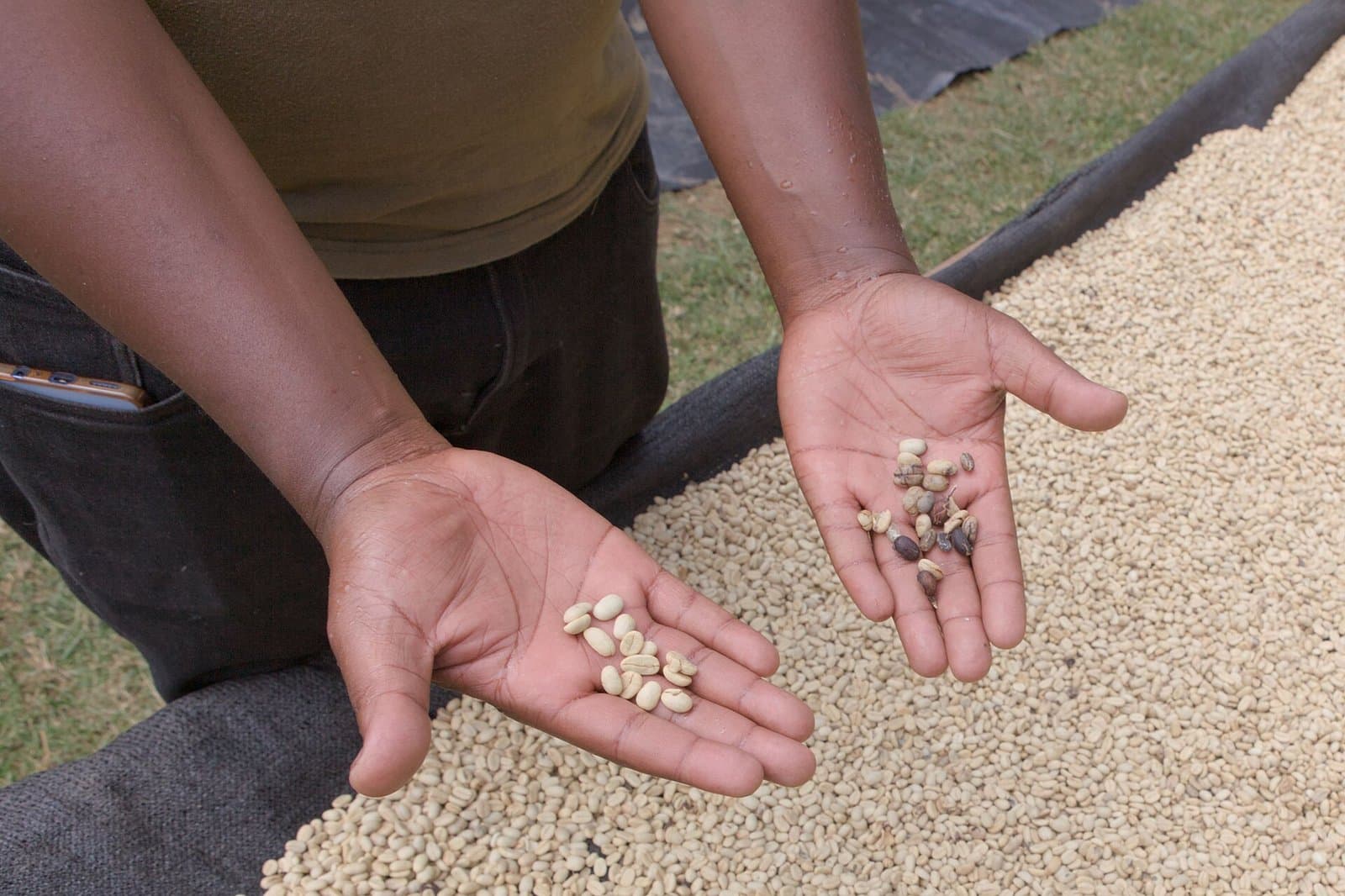
AssessmentThe working sample is graded against the specification for that product. Grading determines what the consignment can be sold as, and it is done before a price is agreed rather than afterwards.
- Assessment against the agreed specification for the commodity
- Measurement of purity, foreign matter and admixture
- Assessment of broken, immature, shrivelled, discoloured and damaged grain
- Size, colour and uniformity assessed where the specification calls for it
- Grade result recorded against the lot and attached to the stock record
Step 5: Moisture testing
AssessmentMoisture is the single biggest determinant of whether a consignment stores safely. Product above the safe moisture level for its commodity is dried down or refused; it is never simply stored and hoped for.
- Moisture measured at intake and recorded against the lot
- Result compared with the safe storage level for that commodity
- Product outside the range dried down, or rejected where drying is not viable
- Re-testing during storage and again before packing or loading
- Test instruments checked and calibrated to a defined schedule
Step 6: Warehouse hygiene
StorageProduct held in a clean, dry, well-ventilated store retains the grade it was bought at. Housekeeping is treated as a scheduled quality control, not as general tidying.
- Cleaning schedule for floors, walls, pallets and handling equipment
- Stock stacked on pallets, clear of walls, with defined aisles for inspection
- Separation of different lots, products and grades to prevent mixing
- Control of ventilation, leaks and standing water in the store
- Personal hygiene, protective clothing and no-eating rules inside the store
Step 7: Pest-control measures
StorageStorage pests can destroy the value of a consignment quickly and can also make it inadmissible at destination. Control is preventive and monitored, and any treatment is carried out by licensed operators using permitted products.
- Scheduled inspection and monitoring for insects, rodents and birds
- Physical exclusion — proofing, screening and sealed doors
- Stock rotation on a first-in, first-out basis to avoid long-held lots
- Treatment or fumigation carried out only by licensed service providers
- Treatment records kept, including product used, dose, date and operator
Step 8: Packaging inspection
DespatchPackaging protects the product through transit and carries the information the destination market requires. It is checked before filling and again once the consignment is packed.
- Packaging material checked for cleanliness, strength and suitability
- Confirmation that the material and format match the contract
- Net weight verification and check-weighing of filled units
- Closure, stitching or sealing checked on filled packaging
- Labelling and markings checked against the buyer's and destination's requirements
Step 9: Loading supervision
DespatchLoading is supervised so that what leaves the store is what was sold, and so that it is protected for the journey. Most disputes that reach a buyer start at this point.
- Container or vehicle inspected for cleanliness, damage, odour and leaks
- Lining and dunnage fitted where the product or route requires it
- Tally of units loaded, reconciled against the packing list
- Photographic record of the loading and of the sealed doors
- Seal number recorded and reported to the buyer
Step 10: Documentation review
DespatchDocuments are checked against the contract and against each other before they are released. An error in a document can hold a consignment at the destination port for longer than the voyage took.
- Commercial invoice and packing list checked against the loaded quantity
- Consistency of product description, weights and marks across all documents
- Confirmation that every certificate the destination requires has been applied for
- Check against the buyer's documentary instructions and payment terms
- Final review and sign-off before documents are released
Every consignment can be traced back
Traceability is not a separate activity — it is the record left behind by every step above. Each lot carries an identifier from intake to despatch, so a delivered consignment can be worked backwards to the suppliers and the stores it came from.
Lot identification
Each intake is given a lot reference that stays with the product through storage, processing and packing.
Source records
The lot reference links to the approved supplier, the collection point and the date the product was received.
Quality records
Sampling, grading, moisture and any re-test results are held against the lot rather than against the shipment alone.
Storage and treatment records
Store location, movements, stock rotation and any pest-control treatment applied are recorded against the lot.
Packing and despatch records
Packing date, packaging format, batch or production marking, loading tally and seal number complete the chain.
Retained samples
Reference samples are held for an agreed period so that a later query can be assessed against the material as shipped.
When something goes wrong
A complaint is treated as information about the system, not as an argument to be won. Every complaint is logged, investigated against the records for that lot, and closed with a documented outcome.
Stage 1: Receive and log
The complaint is recorded with the contract, lot and shipment references, the buyer's description of the problem and any evidence provided.
Stage 2: Acknowledge
The buyer receives an acknowledgement naming the person handling the matter and setting out what happens next.
Stage 3: Investigate
The lot's intake, grading, moisture, storage, packing and loading records are reviewed, along with any retained sample.
Stage 4: Determine the cause
The investigation establishes what actually happened and at which point in the chain, rather than stopping at the symptom reported.
Stage 5: Agree the remedy
The commercial outcome is agreed with the buyer in writing, in line with the contract and the findings of the investigation.
Stage 6: Corrective action
The control that failed is changed — a revised procedure, additional checks, supplier re-assessment, equipment repair or retraining — with an owner and a date.
Stage 7: Verify and close
The corrective action is checked on later consignments to confirm it worked. Only then is the complaint closed and the outcome recorded.
Stage 8: Review
Complaints and corrective actions are reviewed periodically as a group, so that recurring themes reach the quality policy rather than being handled one at a time.
What we hold, and what we do not
This register is published so that buyers can see exactly what exists today and what does not. We do not claim to hold any certificate, licence or accreditation that has not been issued to us.
Documents obtained for a shipment
Phytosanitary certificate
Issued per consignmentApplied for through the responsible national plant health authority where the destination requires it. Issued against inspection of the specific consignment.
Certificate of origin
Issued per consignmentObtained from the designated issuing body for the shipment, confirming the origin of the goods for customs and preference purposes.
Fumigation certificate
Issued per consignmentIssued by a licensed fumigation service provider when treatment is required by the destination or requested by the buyer.
Weight and quality certificate
Issued per consignmentArranged with an independent inspection company where the contract or the letter of credit calls for third-party verification.
Laboratory analysis report
Issued per consignmentCommissioned from an independent laboratory when a buyer or destination requires analysis beyond our own testing. The scope of analysis is agreed in advance.
Company documents and registrations
Certificate of incorporation
Available on requestCompany registration document, provided to buyers and partners as part of due diligence.
Taxpayer identification (TIN) certificate
Available on requestTax registration document, provided on request during onboarding.
Business licence
Available on requestCurrent trading licence, provided on request during onboarding.
Export and trade registrations
To be published once issuedRegistrations held with the relevant Tanzanian trade and agricultural authorities. To be listed individually once confirmed for publication.
Food safety management certification
To be published once issuedNot currently claimed. If and when a recognised food safety certification is formally issued to the company, it will be named here with its scope, issuing body and validity dates — and not before.
Facility and warehouse permits
To be published once issuedPremises-related permits and inspection records. To be published once confirmed for the current facilities.
Buyers carrying out due diligence can request copies of the available documents from our quality team. Documents issued for a specific shipment are supplied with that shipment's documentation set.
Requesting documents: write to info@ibsagro.co.tz stating the commodity, destination and the standard your market requires. We will confirm in writing what applies to your consignment.
Need to see our quality documentation?
Tell us the commodity, the destination and the specification you are buying to. We will set out the checks that apply and the documents that will accompany the shipment.