- Published
- Author
- IBS Agro Trading Limited
- Category
- Agricultural Market Information
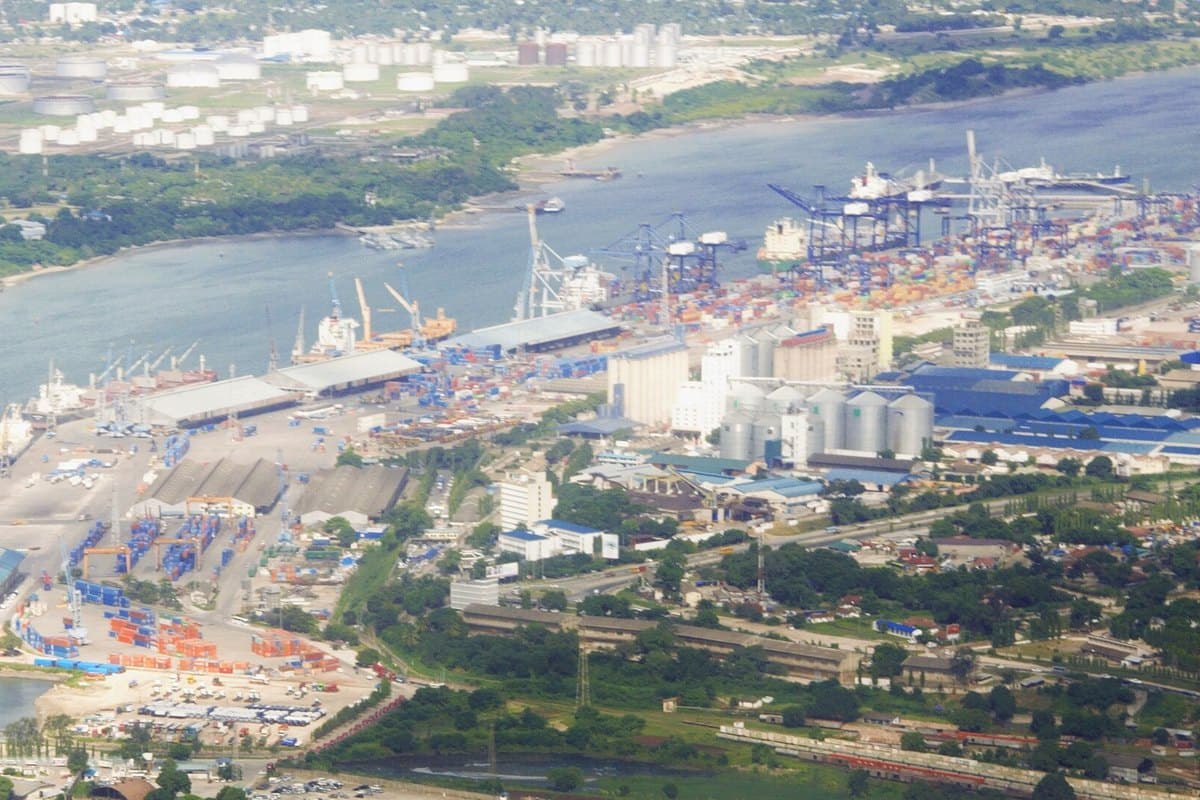
The trade term decides who books the freight, who insures the cargo, where the risk passes and which two prices you can honestly compare. A practical read for a buyer choosing one.
Two suppliers quote the same commodity at the same grade. One is cheaper by a clear margin. Then you notice that the cheap one is EXW and the other is CIF, and the comparison you have just made is meaningless. The trade term is not paperwork trivia at the bottom of an offer — it is the instruction that says how much of the journey is in the price.
EXW is the shortest version. We make the goods available at our premises and everything after that — loading, inland transport, export formalities, freight, insurance, import clearance — is yours to arrange and to pay for. It suits a buyer with an established agent in Tanzania and it suits nobody else, because an EXW price that looks like a bargain in a spreadsheet can stop being one the first time a container has to be booked from eight time zones away.
FCA moves the handover to a named place — typically a terminal or the carrier your forwarder has nominated — and it is the term that fits containerised and air cargo best. FOB is the traditional sea term: risk passes when the goods are on board the vessel at the port of loading. For a full container, the goods are usually handed over at a terminal days before they are lifted aboard, which is precisely the gap FCA exists to close. Many buyers still ask for FOB out of habit, and it still works, but it is worth knowing which one describes what actually happens to your cargo.
CFR and CIF are the terms most East African export quotations are asked for. Under both, we arrange and pay the sea freight to the named discharge port; CIF adds insurance. Here is the point most often misunderstood, and it is worth reading twice: under these terms cost and risk do not transfer at the same place. We pay the freight to destination, but the risk in the goods passes to you at the port of loading, not on arrival. A CIF price buys you a landed cost you can budget against — it does not mean the cargo is ours until it reaches you.
Two practical consequences follow. First, insurance under CIF is conventionally minimum cover unless a higher level is agreed, so a buyer reselling at a margin should check what is actually being insured and ask for more if the exposure warrants it. Second, if something happens to the cargo mid-ocean on a CIF contract, the claim is normally yours to make even though the policy was arranged by us. Neither is a reason to avoid CIF; both are reasons to read it.
For destinations reached overland rather than by sea — Kenya, Uganda, Malawi and the rest of the regional trade — DAP is usually the sensible term: we deliver to a named place and you handle import clearance there. It is the road equivalent of the comparability CIF gives a sea buyer, and it is how most regional enquiries are quoted.
Whichever term you choose, name the place with it. "FOB" on its own is incomplete; "FOB Dar es Salaam", "CIF Nhava Sheva" and "DAP Lilongwe" are instructions a quotation can be built on. And remember what a trade term does not do: it does not transfer ownership of the goods, it does not set your payment terms, and it does not decide who pays which duty at destination. Those are separate clauses in the contract, and leaving them to be implied by the Incoterm is how avoidable arguments start.
We quote EXW, FCA, FOB, CFR and CIF for export shipments, and DAP for regional road destinations. If you are comparing us against another supplier, tell us the term their price is on and we will quote on the same basis, because a comparison on two different terms helps nobody.
Where to go next
The pages below carry the specifications, packaging, shipping basis and destination detail behind this article. Send us your product, grade, quantity and destination and our team will confirm availability before quoting.